
Women are genetically unstoppable
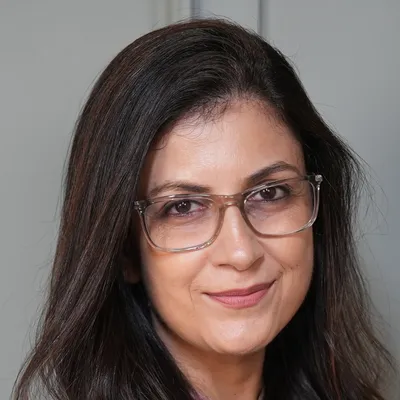

Some women do not enter healing because it is fashionable. They enter it because life leaves them no choice. That was the deepest truth in my conversation with Sharmilee Kapur, a karmic-conscious wellnesspreneur who also plays the roles of a mother and a spiritual healer. She did not build wellness from theory; she built it from need, and that distinction matters.
A great deal of what we currently call strength in women is, in fact, over-functioning. It is staying switched on for too long. It is carrying too much, processing too much, responding too fast, and living in a state of permanent activation that the body was never designed to sustain. Then we glorify it. We call it resilience, capability, and leadership, but unstoppable does not mean always on. It does not mean living in chronic sympathetic activation. It does not mean a life of nervous-system overload. The sympathetic nervous system is the body’s fight-or-flight system; stress activates it, while the parasympathetic system supports rest-and-digest recovery. When stress becomes prolonged, that balance starts to distort.
That is where I believe we need a different approach to women in leadership.
The leadership blueprint was not built around female physiology
The modern leadership template still quietly assumes a more linear body and a more linear energy system, but women do not live linear lives. A woman’s physiology and inner world move through multiple biological and emotional transitions: puberty, menstrual cycles, fertility shifts, pregnancy, postpartum, perimenopause, and menopause. Even official women’s health guidance is clear that pregnancy-related hormonal changes affect almost every organ system in the body. Menopause, too, is not a minor passage; vasomotor symptoms affect roughly 75 to 80% of women, often disrupting sleep, energy, and day-to-day functioning. So when women are asked to lead as if none of this exists, the cost is not small.
It is cumulative and shows up in fatigue and irritability, depletion that gets normalised.
In decision-making that gets heavier over time because high-functioning women still keep delivering, the distortion often goes unnoticed.
/bmi/media/post_attachments/71170d08-1b1.jpg)
The problem is not awareness. It is integration.
One of the sharpest insights from my conversation with Sharmilee was this: we already know what helps us. We know sleep matters. We know pause matters. We know rest matters.
We know the body keeps score. And yet we do not do what we know.
That is not an intelligence problem. It is an integration problem. It is one thing to read about healing. It is another thing to reorganise a life around it.
That is why this conversation matters. Sharmilee speaks about healing not as a polished language, but as a lived experience. She says she built wellness because she needed it. That is a completely different starting point from optimisation culture.
Healing, then, is not an accessory to leadership.
It is infrastructure. The gym alone is not enough. Let me be very clear.
Movement matters. Strength matters. Exercise helps.
Gallup’s 2026 data showed that among women aged 18 to 44, the probability of experiencing a lot of daily stress drops from 68% among non-exercisers to 54% among women who exercise daily or nearly daily. That is meaningful, but it is still not the whole answer.
A gym routine can strengthen the body while leaving the nervous system dysregulated. Protein powders, caffeine shots, performance stacks, and productivity rituals can keep a woman moving while disconnecting her further from what her body is actually asking for.
The question is not whether you are working hard on yourself. The question is, what are you cultivating? Are you cultivating recovery? Are you cultivating discernment? Are you cultivating emotional regulation? Are you cultivating an inner authority toolkit that helps you come back to yourself before stress becomes distortion?
In my work, I call this the Inner Authority Reset Toolkit. That toolkit may include movement.
It may include sleep discipline. It may include hormone literacy. It may include meditation, therapy, breathwork, silence, boundaries, laughter, prayer, journaling, nature, digital detox, or saying no sooner. But it must be a toolkit personalised to your disposition and needs.
Not a trend, not an Insta reel, not what's in fashion, but a customised personalised plan.
Women need an inner authority reset
We do not just need more wellness. We need a new operating model for women in leadership.
One that recognises that many women are not failing because they are weak. They are exhausted from running male-coded blueprints inside female bodies under crowded modern conditions. And those conditions are not light.
Gallup’s latest global data showed that in 2024, 42% of women reported worry and 28% reported sadness during much of the previous day. One in three women reported physical pain during much of the previous day. In workplace research, women are also more likely than men to be pulled between professional and personal responsibilities throughout the day.
So no, this is not just about self-care. This is about judgment.
When restoration is missing, the first thing that often slips is not performance.
It is clarity. And once clarity begins to go, leadership becomes more expensive.
Unstoppable means knowing how to return
This is why I would redefine unstoppable. A few guests on my platform have said, “Women are unstoppable.” “Why don't women stop?” “We need to stop and breathe, too.” “A woman always on is not healthy; we need to stop.”
Unstoppable does not mean never stopping. It does not mean proving strength through exhaustion. It does not mean staying available, productive, and emotionally composed at all times. It means knowing how to return to your centre, your body, your clarity, and your own inner knowing. Again and again until it is a practice you do off the field to play to win on the field.
Women are not powerful because they can stay “on” forever. They are powerful because they can regenerate. They can begin again. Because even after doubt, depletion, hormonal upheaval, grief, caregiving, pressure, or transition, they can find their way back to themselves. That is not softness. That is intelligence.
That is why the future of women’s leadership cannot be built only on more ambition, more performance, and more optimisation. It has to be built on inner authority. Because in a crowded world, the woman who knows how to reset herself will always outlast the one who only knows how to push. And perhaps that is the more useful question for women leaders now: Not how much more can I carry? But what helps me return to myself before I begin leading from depletion? That is where a different kind of leadership begins.
Watch the full episode Unstoppable Woman with Sharmilee Kapur
For women in leadership who are navigating growth and challenges and want to 'stop,' 'pause,' and explore an inner authority reset, here is the link for exploratory conversations.